
Quick Answer: There is no single correct tyre pressure for every car. The right PSI is set by your vehicle manufacturer, usually printed on a sticker inside the driver’s door frame, in the fuel filler flap, or in the handbook, and it typically sits between 28 and 36 PSI depending on the vehicle and load. Running underinflated increases wear on the outer edges of the tyre and raises the risk of a blowout, particularly on faster roads. Mobile Tyres Co checks pressure and tread on every callout. Call 07982 378 899.
Why There Is No Universal Correct Pressure
Tyre pressure is set by the vehicle manufacturer, not by the tyre itself, because the correct figure depends on the car’s weight, suspension setup and how it distributes load across the axles.
This is why two cars fitted with the exact same tyre model and size can still need different pressures. The tyre’s sidewall shows a maximum pressure rating, not the recommended running pressure for your specific car.
Quick Fact: Most passenger cars run somewhere between 28 and 36 PSI, but the only figure that matters is the one specified by your manufacturer for your exact model and trim.
Where to Find Your Car’s Correct Tyre Pressure
Manufacturers place this information in one of three places:
- A sticker inside the driver’s door frame, visible when the door is open, usually the most reliable source
- Inside the fuel filler flap, common on many hatchbacks and smaller cars
- In the vehicle handbook, listed under tyres or maintenance
Many cars list two different pressures, one for normal loads and a slightly higher figure for when the car is fully loaded with passengers and luggage. Always match the figure to how the car is actually being driven that day.
Why Load Changes the Right Pressure
A car carrying five passengers and a full boot needs more air pressure than the same car with just a driver, because the extra weight needs more support from the tyre to maintain its correct shape under load.
Running the loaded-condition pressure on a lightly loaded car, or vice versa, will not cause an immediate problem, but over time it contributes to uneven wear and a slightly harsher or softer ride than the vehicle is designed to give.
What Underinflation Actually Does to a Tyre
Safety First: Underinflated tyres are one of the most common preventable causes of tyre failure on UK roads.
Running below the correct pressure causes:
- Increased wear on the outer edges of the tread, since the tyre flexes more than it should under load
- A build-up of heat inside the tyre, particularly at higher speeds, which increases blowout risk
- Longer braking distances, since an underinflated tyre has a smaller effective contact patch with the road
- Higher fuel consumption, since the engine works harder to overcome the extra rolling resistance
This is one of the reasons pothole damage on routes like the A406 or A10 can be worse than expected. A tyre already running low on pressure has less structural support to absorb a hard impact.
What Overinflation Does to a Tyre
Overinflation is less common but still causes problems:
- Wear concentrated down the centre of the tread rather than across the full width
- A harsher ride, since the tyre has less give to absorb bumps
- Reduced grip in the wet, since less of the tyre’s surface is in contact with the road
Neither underinflation nor overinflation is a reason to guess. Setting pressure to the manufacturer’s exact figure avoids both problems.
How to Check and Set Your Tyre Pressure
- Check pressure when tyres are cold, ideally before driving or after the car has been parked for a few hours, since a warm tyre gives a falsely high reading
- Find your correct PSI from the door frame sticker, fuel flap or handbook
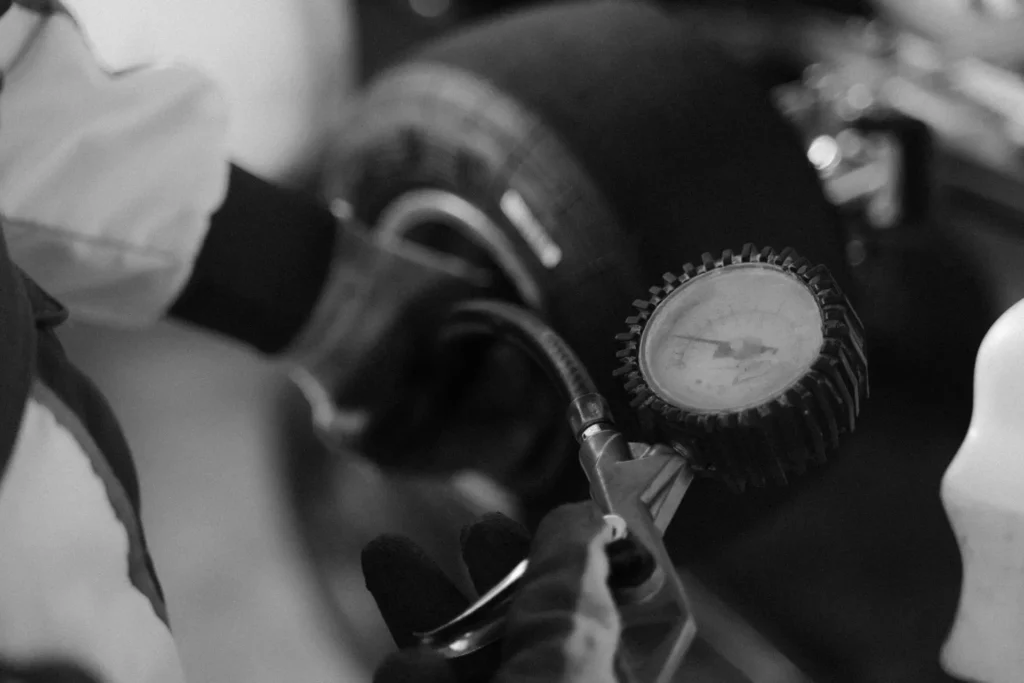
- Remove the valve cap and press the pressure gauge firmly onto the valve
- Compare the reading to your manufacturer’s figure, adjusting for load if the car is carrying passengers or luggage
- Add or release air as needed, most fuel stations have a coin or app-operated air pump
- Check all four tyres plus the spare, since pressure can vary between tyres even if none feel visibly low
- Recheck monthly, since tyres naturally lose a small amount of pressure over time even with no puncture
FAQs
What PSI should my tyres be?
There is no universal figure. Check the sticker inside your driver’s door frame, fuel filler flap, or your vehicle handbook for the exact pressure your manufacturer specifies, typically between 28 and 36 PSI.
Why do some cars list two different tyre pressures?
Many manufacturers list a normal-load and a fully-loaded figure. Use the higher figure when the car is carrying extra passengers or a full boot, and the standard figure for everyday driving.
How often should I check my tyre pressure?
At least once a month, and always before a long journey. Tyres lose a small amount of pressure naturally over time, even without a puncture.
Does underinflation actually cause a blowout?
Yes. Running underinflated builds up excess heat inside the tyre, particularly at higher speeds, which significantly increases the risk of a sudden failure.
Can I use the maximum pressure printed on the tyre sidewall?
No. That figure is the tyre’s maximum rating, not the recommended running pressure for your specific car. Always use the manufacturer’s figure instead.
Does Mobile Tyres Co check tyre pressure during a callout?
Yes. Pressure and tread depth are checked on every visit, alongside whatever tyre issue prompted the callout.
Not sure your pressure is right, or dealing with a slow puncture? Mobile Tyres Co checks and fits tyres at your home or roadside, 24/7, with no callout fee. Call 07982 378 899.