
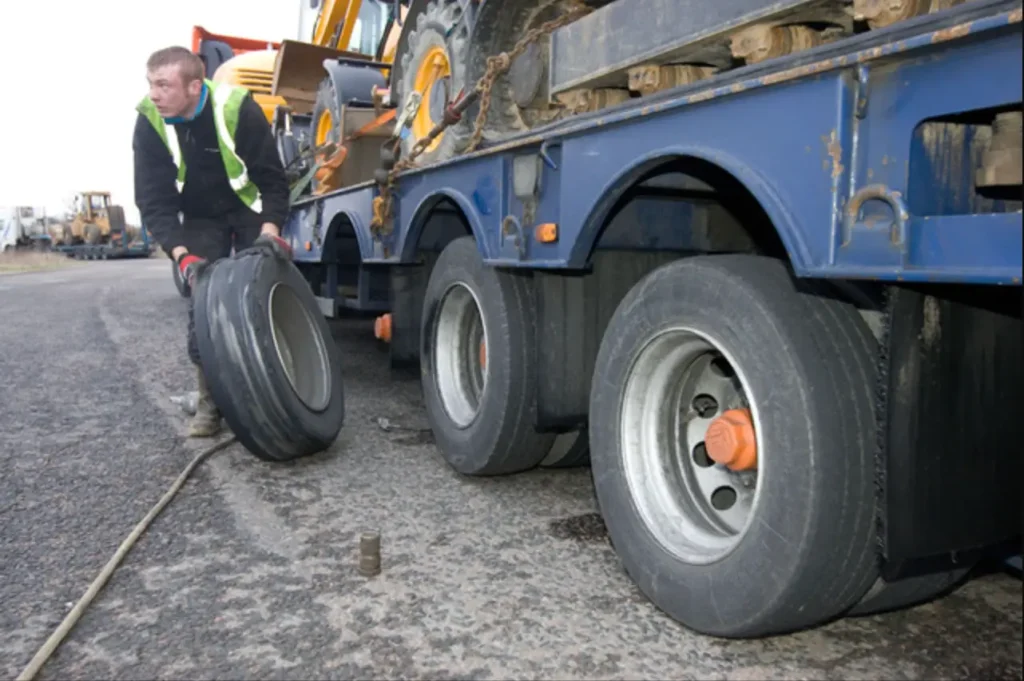
A flat tyre never happens at a convenient time. Whether you are sitting in slow-moving traffic on the North Circular, parked up after a late shift in Hackney, or crawling along the A12 near Stratford on a Monday morning, the feeling is the same. Panic, frustration, and the immediate question: what do I do now?
This guide walks you through exactly what to do, step by step, from the moment you notice something is wrong to the point where you are back on the road safely. No jargon, no fluff. Just clear, practical advice from people who deal with this across London every single day.
Step 1: Do Not Panic. But Do Act Quickly
The first few seconds after noticing a flat tyre matter more than most drivers realise. If you are moving, resist the urge to brake hard. Instead, ease off the accelerator gradually and keep a firm grip on the steering wheel. A flat tyre, especially a front one, can pull sharply to one side.
If you are on a fast road such as the M25, the A406 (North Circular), or the A13, do not attempt a lane change at speed. Slow down gradually, signal clearly, and move towards the nearside lane when it is safe to do so.
Safety First: Switch on your hazard lights the moment you suspect a tyre problem. This is non-negotiable, especially in London traffic.
Step 2: Find a Safe Place to Stop
Where you stop matters enormously. In London, pulling over safely can be more challenging than in a rural area because of bus lanes, double yellow lines, and heavy pedestrian zones.
Here is what to look for:
- A wide pavement or side road away from moving traffic
- A layby, car park, or service road if you are near one
- Avoid stopping on red routes, bus stops, or junctions
- On a motorway or dual carriageway, reach the hard shoulder or emergency refuge area
If you are near Tottenham, Ilford, or along the A10 corridor, residential side streets are often your safest bet. Pull over as far from moving traffic as possible before stopping completely.
Step 3: Get Out Safely and Assess the Situation
Once stopped, do not immediately get out into traffic. Check your mirrors and wait for a gap. If you have passengers, ask them to exit from the side away from traffic and move to a safe distance, ideally behind a barrier or onto the pavement.
Now take a look at the tyre. You are checking for:
- A completely flat tyre that is sitting on the rim
- A slow puncture that still has some air in it
- Visible damage such as a nail, screw, or sharp object embedded in the tread
- Sidewall bulging or cracking, which means the tyre cannot be repaired and must be replaced
Important: Do not attempt to drive on a completely flat tyre, even at very low speed. You will damage the wheel rim within metres, turning a simple repair into a costly replacement.
Step 4: Decide Whether to Change It Yourself or Call for Help
Here is where most drivers get stuck. You have two realistic options.
Option A: Change It Yourself
If your vehicle carries a full-size spare or a space-saver spare, and you feel confident doing so, a wheel change is possible. You will need a jack and wheel brace, which should be in your boot. Bear in mind that space-saver spares (the thin, compact ones) are limited to around 50 mph and should only be used to reach a tyre fitting service, not as a long-term solution.
In London, changing a wheel on a busy street is rarely practical or safe. Most drivers find it stressful and time-consuming, particularly in wet conditions or at night.
Option B: Call a Mobile Tyre Fitter
This is increasingly the preferred option for London drivers, and for good reason. A professional mobile tyre fitter comes directly to your location, whether that is a residential street in Walthamstow, a car park in Enfield, or the side of the A12 near Leyton. They carry the equipment to repair or replace your tyre on the spot, usually within 30 to 60 minutes of your call.
Did You Know: Many London drivers no longer carry a spare wheel because modern cars often come without one. If this applies to your vehicle, a mobile tyre service is not just convenient. It is your only real option.
Step 5: Call Mobile Tyres Co for Chorleywood
Mobile Tyres Co operates 24 hours a day, 7 days a week across London and surrounding areas. Whether you are dealing with a puncture in East London, a blowout on the North Circular, or a slow leak discovered on your driveway in Hertfordshire, the process is straightforward.
- Call or book online at mobile-tyres.co
- Give your location and brief details about the tyre problem
- Receive a clear, upfront quote with no hidden charges
- A qualified technician is dispatched to you with the right tyres and equipment
- Your tyre is repaired or replaced on-site, usually within 30 to 60 minutes
There is no towing, no waiting rooms, and no half-day wasted at a garage. The service comes to you.
Step 6: While You Wait, Stay Safe
If you have called for help and are waiting at the roadside, a few safety habits will protect you and your vehicle:
- Keep your hazard lights on at all times
- Stay away from the vehicle if you are on a fast road. Wait behind the barrier if there is one
- Do not sit in the car if it is on or very close to a live lane
- If it is dark, use a torch or your phone light to make yourself visible to approaching drivers
- Do not attempt a repair yourself if you are on a motorway. Wait for the professional to arrive
Common Causes of Flat Tyres on London Roads
Understanding why flat tyres happen can help you prevent them. London’s roads are notoriously hard on tyres, and a few specific causes come up again and again.
- Nails and screws from construction sites are extremely common across central and East London, where building work is ongoing.
- Kerb strikes from tight parking manoeuvres can cause sidewall damage that is invisible until the tyre fails.
- Valve deterioration leads to slow air leaks that many drivers mistake for a gradual pressure drop.
Checking your tyre pressure monthly and keeping an eye on tread depth are simple habits that catch problems before they leave you stranded.
Frequently Asked Questions
Can a puncture always be repaired?
Not always. Punctures in the central tread area that are smaller than 6mm in diameter can usually be repaired safely to British Standard BSAU159. Damage to the sidewall, tyre shoulder, or any puncture caused by a very large object will require a full replacement.
How quickly can a mobile tyre fitter reach me in London?
Mobile Tyres Co aims to reach customers across London within 30 to 60 minutes. Response times can vary depending on traffic conditions and your exact location, but our technicians are spread across the city to keep arrival times as short as possible.
Is mobile tyre fitting more expensive than going to a garage?
Not significantly. In most cases, mobile tyre fitting is comparably priced to a high street garage, and when you factor in the convenience, the time saved, and the fact that you avoid towing costs, most London drivers find it better value overall.
What if my car does not have a spare wheel?
Many modern vehicles, particularly BMWs, Mercedes, and Minis, are fitted with run-flat tyres or simply come without a spare. If this is the case, a mobile tyre service is your fastest and safest solution. Do not attempt to drive on a flat tyre hoping to reach a garage.
Final Word
A flat tyre in London does not have to mean a wasted day or an expensive recovery bill. With a mobile tyre service available around the clock, across every part of the city from Hackney to Hemel Hempstead and Walthamstow to West London, help is never far away.
Save the number for Mobile Tyres Co in your phone now, before you need it. When a flat tyre happens (and at some point, it will), you will be very glad you did.
Call Mobile Tyres Co: 07982 378 899 | Available 24/7 | mobile-tyres.co
I recently had a flat tyre late in the evening and found this article “Flat Tyre in London? Here is Exactly What to Do” extremely helpful. The steps were simple, clear, and easy to follow, especially during a stressful situation on the roadside. I searched for tyres near me in London and came across this service. Their response time was excellent, and the technician arrived quickly with the correct tyre size for my car. The whole process was professional, affordable, and much faster than I expected. It’s great to see a company genuinely helping drivers with useful advice and reliable emergency tyre support across London. Highly recommended for anyone needing quick tyre assistance.