
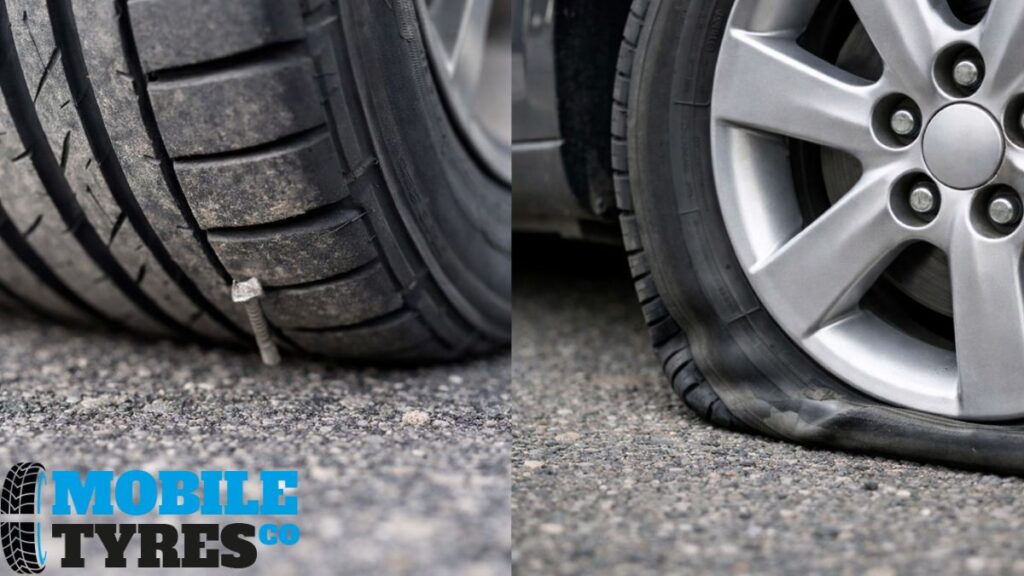
You notice your car feels a bit off. Maybe the steering is slightly heavy. Or you’re topping up air more often than usual. You ignore it for a day or two… then suddenly, you’re dealing with a fully deflated tyre.
That’s the reality of slow puncture vs flat tyre situations — one creeps up quietly, the other hits you all at once.
But here’s the thing: understanding the difference isn’t just about convenience. It’s about safety, cost, and avoiding bigger problems down the road.
Let’s break it down properly — in plain English, with real examples and practical advice.
What Is a Slow Puncture?
A slow puncture is exactly what it sounds like.
Air leaks gradually from your tyre over time — sometimes hours, sometimes days.
You won’t always notice it immediately.
Common Signs of a Slow Puncture
These are the typical slow puncture warning signs drivers report:
- Tyre pressure drops slowly over days
- You need frequent air top-ups
- Slight pulling to one side while driving
- Reduced fuel efficiency
- Tyre looks slightly deflated (but not flat)
I’ve personally seen cases where drivers kept refilling their tyre every week without realising they had a nail embedded in it.
What Is a Flat Tyre?
A flat tyre is more obvious. And more urgent.
It happens when the tyre loses air quickly — often instantly.
Common Causes of a Flat Tyre
- Sudden puncture
- Blowout at speed
- Valve failure
- Severe rim damage
You’ll know it immediately:
- Loud noise
- Sudden loss of control or stability
- Car pulling sharply
In short, a flat tyre stops your journey right there.
Slow Puncture vs Flat Tyre UK – Key Differences
Let’s compare both side by side.
| Feature | Slow Puncture | Flat Tyre |
| Air loss | Gradual | Sudden |
| Warning signs | Subtle | Immediate |
| Driving possible | Limited | No |
| Risk level | Medium (increases over time) | High |
| Repair options | Often repairable | May require replacement |
For UK drivers, understanding this difference matters — especially with unpredictable road conditions and potholes.
Slow Puncture Causes UK Drivers Should Know
Let’s talk about the root problem.
Most Common Causes
- Nails or screws embedded in the tread
- Damaged valve stems
- Poor wheel sealing
- Corrosion on alloy wheels
- Minor tyre cuts
In cities like London, construction debris is a major contributor.
Real Observation
A mechanic I spoke to recently mentioned that nearly 60–70% of slow punctures they see are caused by small objects lodged in tyres — things drivers never even notice.
Is a Slow Puncture Dangerous?
Short answer: yes.
But it depends on how long you ignore it.
Why It’s Risky
- Reduced tyre pressure affects braking distance
- Increased heat buildup can weaken the tyre
- Higher chance of sudden blowout
According to UK road safety data, underinflated tyres are a factor in a significant number of accidents every year.
So if you’re wondering “is a slow puncture dangerous?” — the answer is:
It becomes dangerous the longer you leave it untreated.
Slow Puncture – How Long Can You Drive?
This is one of the most common questions.
And honestly, there’s no perfect answer.
General Guideline
- If pressure is stable: short-term driving is possible
- If pressure drops quickly: stop driving
Practical Advice
If you’re topping up air every day — that’s not normal.
If you’re losing pressure within hours — that’s urgent.
My Rule of Thumb
If you’re asking “slow puncture how long can you drive”, you’ve probably already waited too long.
Get it checked.
Warning Signs You Should Never Ignore
Let’s make this very clear.
These slow puncture warning signs mean you need immediate attention:
- Tyre loses pressure overnight
- Steering feels heavy or unstable
- Uneven tyre wear
- TPMS (tyre pressure warning light) is on
- Visible object in tyre
Ignoring these can turn a minor repair into a full replacement.
What Should You Do If You Suspect a Slow Puncture?
Here’s a simple action plan.
Step-by-Step
- Check tyre pressure immediately
- Inspect for visible damage
- Avoid long drives
- Book a professional inspection
If you’re at home, a slow puncture repair mobile service is often the easiest solution.
Slow Puncture Repair Mobile – Is It Worth It?
Absolutely — especially in busy areas.
A slow puncture repair mobile service comes to your location and fixes the issue on the spot.
Benefits
- No need to drive on a damaged tyre
- Saves time
- Quick diagnosis
- Often same-day service
When It Works Best
- Nail or screw punctures
- Minor air leaks
- Valve issues
When Does a Tyre Need Replacement Instead?
Not all punctures can be repaired.
Replace the Tyre If:
- Damage is on the sidewall
- Hole is too large
- Tyre structure is compromised
- You’ve driven too long while underinflated
A good technician will always tell you honestly.
Real-Life Scenario: Slow Puncture Gone Wrong
Let me share a quick example.
A driver noticed their tyre losing pressure slowly over a week. They kept topping it up and ignored it.
One motorway trip later:
- Tyre overheated
- Blowout occurred
- Rim damaged
What could’ve been a £25 repair turned into a £300+ problem.
This happens more often than people think.
How to Prevent Slow Punctures
You can’t avoid everything. But you can reduce the risk.
Practical Tips
- Check tyre pressure weekly
- Avoid driving over debris
- Inspect tyres visually
- Replace worn tyres early
- Keep valve caps secure
These small habits make a big difference.
Expert Insight: Why Tyre Maintenance Matters
According to automotive safety studies:
- Proper tyre pressure improves fuel efficiency by up to 3%
- Correct tyre maintenance extends tyre life significantly
- Poor tyre condition increases accident risk
It’s not just about saving money — it’s about staying safe.
Quick Comparison Checklist
Here’s a simple way to remember:
Slow Puncture
- Gradual air loss
- Can drive short distances
- Needs quick attention
Flat Tyre
- Sudden air loss
- Cannot drive
- Immediate action required
Final Thoughts: Don’t Wait Until It’s Too Late
Understanding slow puncture vs flat tyre isn’t just technical knowledge — it’s practical, everyday driving awareness.
Here’s what really matters:
- A slow puncture is easy to ignore… but risky over time
- A flat tyre demands immediate action
- Early detection saves money and stress
- Mobile repair services make life easier
- Regular checks prevent bigger issues
If something feels off with your tyre, trust your instincts.
Because in most cases, that “small issue” is your car trying to warn you — before it turns into a much bigger problem.
Frequently Asked Questions
Can a slow puncture fix itself?
No. It will only get worse over time.
How much does repair cost in the UK?
Usually £20–£40 for simple punctures.
Can mobile services fix all punctures?
Most — but not severe damage.