
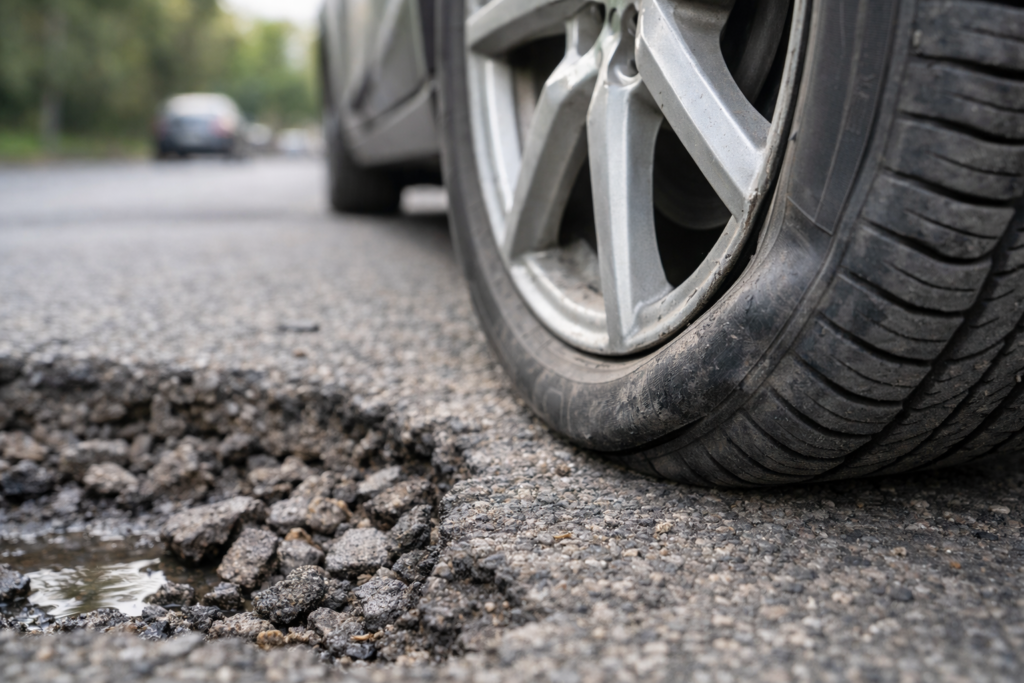
You’re driving along, everything feels normal… then bang. The steering jolts, your heart skips a beat, and you instantly know — you’ve just hit a pothole.
If you’ve ever dealt with pothole damage to your tyre or rim, you already know it’s more than just an inconvenience. It can ruin your day, cost you money, and in some cases, put your safety at risk.
I’ve seen this firsthand. A client once drove into a seemingly harmless dip in East London — turned out it caused a hidden crack in the rim and a slow air leak that only showed up the next morning. These things aren’t always obvious at first.
So, what should you do right after it happens? And how do you handle things properly in 2026 — from inspections to claims?
Let’s break it down step by step.
Pothole Damage to Your Tyre or Rim: Why Pothole Damage Is a Bigger Problem Than You Think
Potholes aren’t just annoying — they’re expensive.
According to UK road condition reports (including data from the RAC and local councils), millions of potholes are reported every year. In fact:
- Drivers in the UK spend over £1 billion annually on pothole-related vehicle repairs
- Tyres and wheels are among the most commonly damaged parts
- Urban areas like London see a higher rate of claims due to traffic volume
If you’re dealing with a pothole damaged tyre London, you’re definitely not alone.
Immediate Steps After You Hit a Pothole
Let’s keep this simple. The first few minutes matter.
1. Stay Calm and Pull Over Safely
Don’t panic. Find a safe place to stop as soon as possible.
2. Do a Quick Visual Check
Look for obvious signs:
- Flat tyre
- Visible bulge
- Bent rim
- Leaking air
If you notice a hit a pothole tyre bulge, that’s a serious warning sign. More on that shortly.
3. Listen and Feel
Drive slowly (if safe) and check:
- Is the steering pulling?
- Any vibration?
- Strange noises?
If yes, don’t continue driving far.
Common Types of Pothole Damage
Not all damage looks the same. Here’s what you might be dealing with:
Tyre Damage
- Sidewall bulges
- Cuts or punctures
- Sudden air loss
- Complete blowout (yes, a burst tyre after pothole is common)
Rim Damage
- Bent alloy wheel
- Cracks in the rim
- Air leaks due to poor sealing
Suspension Impact
Sometimes the issue goes deeper:
- Misalignment
- Damaged shocks
- Steering issues
That Tyre Bulge? Don’t Ignore It
Let’s talk about one of the most dangerous outcomes.
If you’ve hit a pothole tyre bulge, it means the internal structure of your tyre has been compromised.
Here’s what’s happening:
- The inner layers of the tyre weaken
- Air pushes outward, creating a visible bubble
- The tyre becomes unstable
Why This Is Risky
That bulge can burst at any time — especially at high speeds.
My advice? Replace it immediately.
Don’t try to “get a few more miles” out of it. It’s not worth the risk.
Can You Keep Driving After Pothole Damage?
Short answer: It depends.
Here’s a quick guide:
| Condition | Safe to Drive? | Action |
| Minor vibration | Maybe | Drive slowly to a garage |
| Tyre bulge | No | Replace immediately |
| Flat tyre | No | Use spare or call assistance |
| Bent rim | Risky | Inspect ASAP |
| Steering issues | No | Stop driving |
If you’re unsure, always assume the worst and get it checked.
Pothole Rim Damage Mobile Repair – Is It Worth It?
In 2026, mobile repair services have become incredibly popular.
If you’re dealing with pothole rim damage mobile repair, here’s what you should know:
Pros
- Convenient (they come to you)
- Faster than traditional garages
- Often cheaper for minor repairs
Cons
- Not suitable for severe cracks
- Quality varies between providers
When Mobile Repair Works Best
- Slight bends in alloy wheels
- Cosmetic damage
- Minor air leaks
But if the rim is cracked or heavily deformed? Replace it.
How Much Does Pothole Damage Cost?
Let’s be real — this is what most people worry about.
Average UK Costs (2026 Estimates)
- Tyre replacement: £60 – £200 per tyre
- Alloy wheel repair: £80 – £150
- New alloy wheel: £200 – £600+
- Suspension repairs: £150 – £1,000+
Costs vary depending on vehicle type and damage severity.
Can You Claim Compensation in the UK?
Yes — and many people don’t realize this.
If your vehicle suffered pothole tyre claim UK damage, you may be able to claim from the local council.
When You Can Claim
- The pothole was known but not fixed
- The road authority failed to maintain the road properly
What You Need
- Photos of the pothole
- Photos of the damage
- Location details
- Repair invoices
Important Tip
Councils often reject claims if they can prove regular inspections were done.
Still, it’s worth trying — especially for expensive repairs.
Step-by-Step: How to File a Pothole Claim
- Document Everything
- Take clear photos immediately
- Capture road signs or landmarks
- Take clear photos immediately
- Measure the Pothole
- Depth and width matter
- Depth and width matter
- Report It Online
- Use your local council’s website
- Use your local council’s website
- Submit Your Claim
- Include receipts and evidence
- Include receipts and evidence
- Follow Up
- Don’t just submit and forget
- Don’t just submit and forget
Prevention Tips (From Real Experience)
You can’t avoid every pothole. But you can reduce the risk.
Practical Tips
- Keep tyres properly inflated
Underinflated tyres are more vulnerable - Avoid puddles when possible
They often hide deep potholes - Slow down on rough roads
Speed increases damage impact - Maintain safe distance
So you can spot hazards early - Check tyres regularly
Small issues become big problems fast
I’ve personally noticed that drivers who check tyre pressure monthly face fewer serious issues.
Winter and Potholes: A Dangerous Combo
Cold weather makes roads worse.
Here’s why:
- Water freezes and expands
- Asphalt cracks
- Traffic worsens the damage
That’s why pothole incidents spike during winter months in the UK.
When to Replace vs Repair
This is where people often get confused.
Replace If:
- Tyre has a bulge
- Sidewall is damaged
- Rim is cracked
Repair If:
- Minor rim bend
- Cosmetic wheel damage
- Small puncture (in safe zone)
When in doubt, get a professional inspection.
Real-World Scenario
Let me give you a quick example.
A driver in North London hit a pothole at 30 mph:
- No immediate flat tyre
- Slight vibration
They ignored it.
Two days later:
- Tyre burst on motorway
- Rim damaged further
Total repair cost? Over £500.
If they had checked it immediately, they might’ve spent less than £100.
Warning Signs You Should Never Ignore
Watch out for these after hitting a pothole:
- Steering pulling to one side
- Unusual vibrations
- Visible tyre bulge
- Rapid air loss
- Clunking sounds
These are not “wait and see” issues.
Final Thoughts: What Really Matters
Dealing with pothole damage to your tyre or rim isn’t just about fixing your car — it’s about safety, timing, and smart decisions.
Here’s what you should remember:
- Always inspect your vehicle immediately after impact
- Never ignore a tyre bulge or unusual vibration
- Consider mobile repair for minor rim issues
- Keep documentation if you plan to claim
- Act quickly — delays make things worse
Potholes aren’t going away anytime soon. But knowing exactly what to do? That puts you in control.
And honestly, that’s the difference between a minor inconvenience… and a major, expensive problem.